Tithes vs Offerings: What's the Difference?
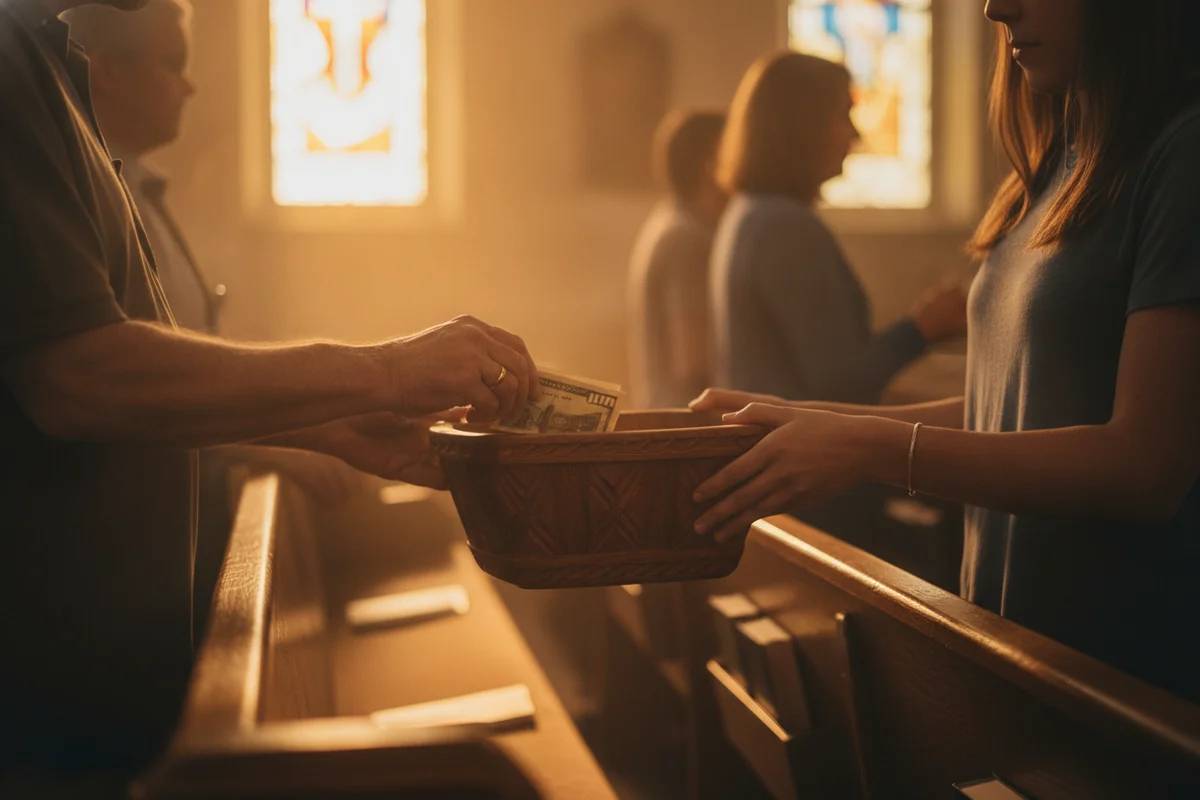
A tithe is the first ten percent of your income. It’s not a suggestion or a guideline, it’s the portion Scripture defines and calls you to bring. An offering is everything you give beyond that. There’s no set percentage on an offering. You give it as you’re led, for a specific need or cause, on top of the tithe rather than instead of it.
That’s the whole distinction. The tithe is fixed and commanded. The offering is voluntary and open-ended. Most of the confusion around these two words comes from churches using “tithes and offerings” as a single phrase for the collection plate, which blurs a line the Bible actually draws pretty clearly.
Get the order right and the rest of this is simple. Tithe first, off the top. Offering after, whatever you’re moved to give beyond it. Confuse the order and you’ll end up treating both like the same optional category, which is exactly the mistake this article is here to prevent.
What the Bible Means by “Tithe”
The tithe shows up early and stays consistent. “And all the tithe of the land, whether of the seed of the land, or of the fruit of the tree, is the LORD’s: it is holy unto the LORD” (Leviticus 27:30). That’s a tenth, set apart, called holy. Not a tenth of what’s left over after expenses. A tenth off the top.
Malachi 3:8 is the verse most people know without realizing it’s the one they know: “Will a man rob God? Yet ye have robbed me. But ye say, Wherein have we robbed thee? In tithes and offerings.” This is the verse that pairs the two words, and it’s worth noticing what it does. God names them as two separate things in the same sentence. Tithes. And offerings. If they meant the same thing, He wouldn’t need both words.
The tithe is the baseline. It’s not up for negotiation based on how the month went. If you want the full case for why, What Is a Tithe? walks through it in depth, and How Much Should I Tithe? covers the gross-versus-net question people ask right after.
What Counts as an Offering
An offering is different in kind, not just in size. Exodus 35:29 describes the people building the tabernacle: “The children of Israel brought a willing offering unto the LORD, every man and woman, whose heart made them willing.” Willing is the operative word. Nobody was told how much. They gave because they wanted to.
Paul makes the same point to the Corinthians about a relief offering for the church in Jerusalem: “Every man according as he purposeth in his heart, so let him give; not grudgingly, or of necessity: for God loveth a cheerful giver” (2 Corinthians 9:7). Notice there’s no percentage attached. Paul doesn’t say ten percent, or five percent on top of the tithe. He says give what you’ve decided in your own heart, and give it cheerfully.
That’s the offering in a sentence. It’s not commanded the way the tithe is. It’s a response, prompted by something specific, given at an amount you set.
You can see the same pattern earlier in Exodus. Moses had to tell the people to stop bringing materials for the tabernacle because they’d already given more than the work required (Exodus 36:6-7). Nobody sets a quota and has that problem. That’s what a freewill offering looks like when it’s working the way it’s supposed to.
How Much Should Each One Be
The tithe is ten percent. That part isn’t ambiguous, and it’s the same across every honest reading of the text. Use the tithe calculator to get the exact number for your income and pay schedule if you haven’t already.
The offering doesn’t have a number attached to it, and that’s by design. It’s sized to the need in front of you and what you’re able to give beyond your tithe. Some months that’s nothing extra. Some months it’s significant, because a missionary is raising support or a family in your church just lost a parent. The tithe is the same every paycheck. The offering moves.
People sometimes ask if there’s a floor or ceiling on offerings, some minimum percentage on top of the tithe that makes you “generous enough.” There isn’t one. Scripture is oddly quiet on offering percentages precisely because it’s not that kind of gift. A widow’s two mites and a wealthy man’s large check can both be exactly right, because the measure isn’t the amount, it’s the willingness behind it (Mark 12:41-44).
What Offerings Look Like in a Modern Church
Most churches take offerings for things that fall outside the general fund the tithe supports. A few common categories:
Missions. A special collection to send or support missionaries, often tied to a missions Sunday or a specific trip.
Benevolence. Money set aside to help a family in the congregation with rent, medical bills, or a sudden loss of income.
Building funds. A capital campaign for a new building, a renovation, or paying down a mortgage on the property.
Love offerings. A gift given to bless a specific person, often a guest speaker, a retiring pastor, or a missionary home on furlough. It’s called a love offering because that’s exactly what it is, not owed, given out of affection and gratitude.
Every one of these is optional. You can be a fully tithing member of a church and never give to a single one of them, and you haven’t failed to give what’s required. You’ve simply chosen where your extra giving goes, or chosen not to give extra that month.
The Confusion at the Offering Plate
Here’s where most people get tangled up. Sunday morning, the usher passes a plate, and someone announces it’s time to collect “tithes and offerings.” One basket, one moment, two different obligations rolled into a single phrase. People walk away thinking the words are interchangeable, and we understand why. The church itself uses them that way from the pulpit.
But collecting them together doesn’t make them the same thing. It just means the offering plate is convenient for gathering both kinds of giving at once. Your ten percent is still the tithe, still commanded, still due regardless of your mood or your month. Anything past that, whatever you drop in beyond the ten percent, is the offering, and it’s yours to decide.
If your church only ever says “tithes and offerings,” it’s worth knowing which part of your giving is which, if only so you’re not confused about what’s required and what’s a gift.
Order Matters
Bring the tithe first. Not what’s left after the offering, not whatever feels comfortable after everything else is paid. The tithe comes off the top, the same way firstfruits came off the top of the harvest in Israel. Then, if you’re able and led to give more, the offering comes on top of that.
Reverse the order and you’ll usually end up shortchanging the tithe. People who try to figure out their giving as one lump sum (“I’ll give what I can this month”) tend to give less overall than people who separate the two: ten percent, non-negotiable, then whatever else on top. Treat the tithe like a bill that’s already spoken for, and let the offering be what it actually is, a response instead of an obligation.
If you’re weighing why any of this matters in the first place, Why Should I Tithe? makes the case from the ground up. And if you haven’t run your own numbers yet, the tithe calculator takes less than a minute.